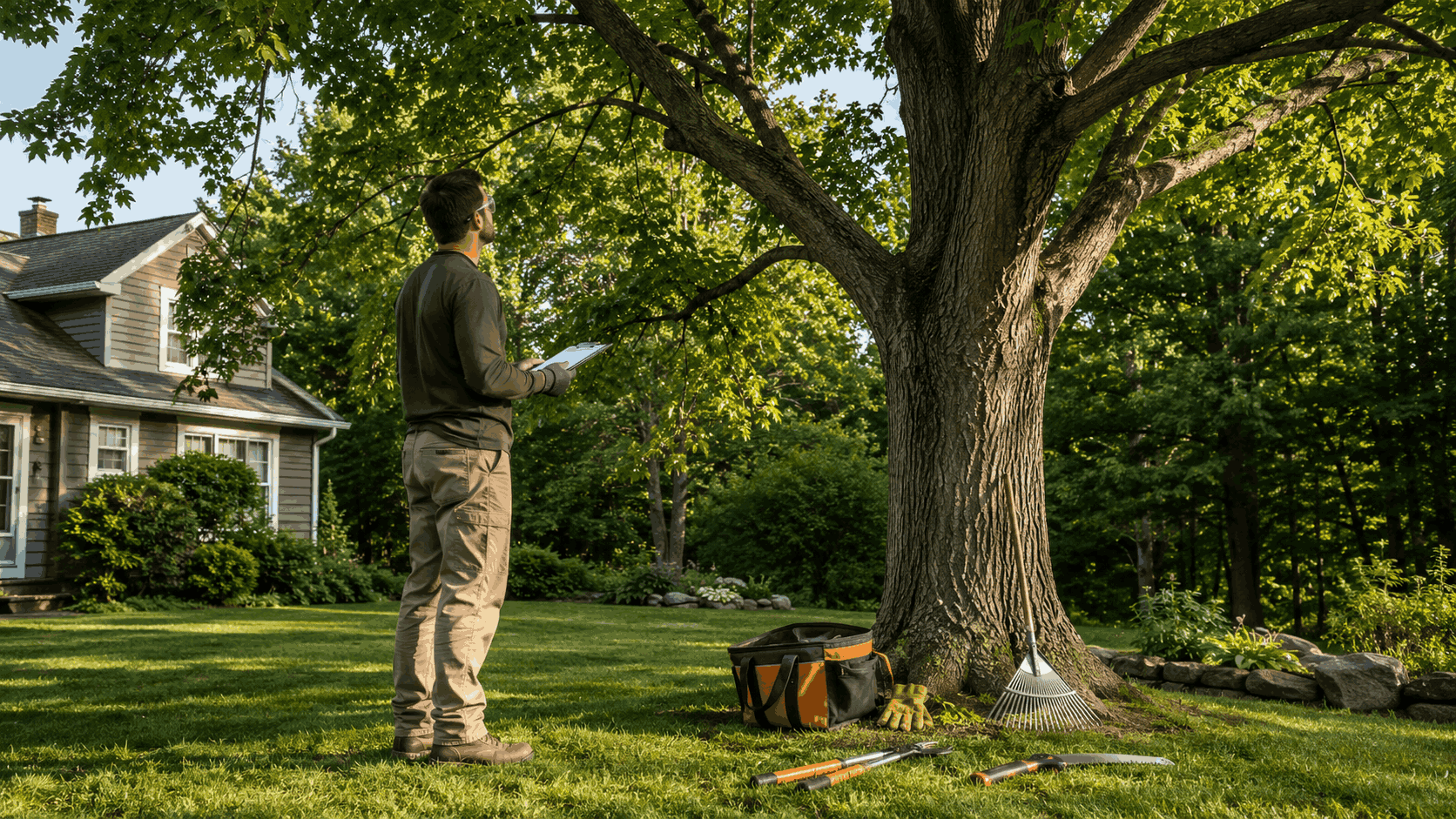
Trees can make a property feel more peaceful, shaded, and complete. They add character to a yard, improve curb appeal, and help create a more comfortable outdoor space. But healthy trees do not stay that way without care. Branches grow unevenly, deadwood appears, storms break limbs, and seasonal changes can reveal problems that were easy to miss.
That is why tree maintenance matters. A consistent care routine helps property owners spot concerns early, protect nearby structures, and support stronger growth over time. For homeowners in Pleasant Valley, Poughkeepsie, Hyde Park, LaGrange, Salt Point, Hopewell Junction, and nearby Hudson Valley communities, regular care is especially valuable because mature trees, wooded lots, heavy rain, winter weather, and wind can all affect tree health.
This guide explains what routine care includes, when tree trimming may be needed, and when it is time to call a professional.
What Tree Maintenance Actually Includes
Tree maintenance is the ongoing care that helps trees stay safer, healthier, and better shaped. It can include visual inspections, pruning, tree trimming, dead branch removal, canopy thinning, pest checks, watering guidance, and cleanup around the base of the tree.
The exact needs depend on the tree’s age, species, location, and condition. A young tree may need structural pruning to guide its shape as it grows. A mature tree may need selective cuts to remove weak limbs or reduce heavy growth near a roof, driveway, fence, walkway, or utility area.
Good care is not about cutting as much as possible. It is about making careful decisions that support the tree’s long-term health. Removing too much at once can stress a tree and leave it more vulnerable to disease, decay, or weak regrowth.
Why Healthy Trees Still Need Attention
A tree can look strong from a distance and still have hidden problems. Dead branches may sit high in the canopy. Limbs can rub together and create weak spots. Roots may struggle because of compacted soil, poor drainage, nearby construction, or damage from lawn equipment.
Regular tree maintenance helps catch these issues before they turn into bigger concerns. It can also improve airflow through the canopy, reduce heavy growth, and keep branches from scraping against nearby structures. Over time, that can mean fewer hazards and a safer property.
Tree care also supports curb appeal. A well-maintained tree looks intentional, balanced, and healthy. It can provide shade without making the yard feel crowded, dark, or overgrown.
Signs Your Tree May Need Service
Property owners should pay attention to changes in their trees throughout the year. Warning signs can include dead branches, hanging limbs, cracked branches, peeling bark, fungal growth, sudden leaf loss, or a noticeable lean. Low branches over walkways, driveways, and patios can also create safety concerns.
Tree trimming may be needed when branches touch a roof, block visibility, grow into nearby plants, or hang too close to vehicles and outdoor living areas. Even if the tree looks healthy, poor branch placement can still lead to property damage.
Look at the base of the tree as well. Exposed roots, soft soil, pooling water, trunk wounds, missing bark, and mushrooms growing near the trunk can all point to stress. These details can tell a professional a lot about the tree’s condition.
How Tree Trimming Fits Into Proper Care
Tree trimming is one part of tree care, but it should never be treated as simple yard cleanup. Every cut affects how a tree grows. Poor cuts can invite decay, weaken branch structure, or remove too much of the living canopy.
When done correctly, tree trimming can improve safety, shape, and clearance. It can reduce weight on overextended limbs, open crowded areas, and help keep branches away from roofs, siding, fences, driveways, and walkways.
Timing matters too. Some work can happen whenever safety is a concern, especially after storm damage. Routine trimming, however, should follow the right seasonal window whenever possible. In the Hudson Valley, where trees experience all four seasons, professional timing can help reduce stress and support healthier growth.
What You Can Do Between Professional Visits
You do not need special equipment to support your trees between visits. Walk your property regularly and look for broken limbs, dead branches, unusual leaf color, insect activity, or branches getting too close to your home.
Keep the area around the trunk clean. Remove fallen debris, but avoid piling mulch directly against the bark. Mulch should sit around the tree, not against the trunk. Watering should also be intentional, especially for newly planted trees or trees showing signs of stress during dry periods.
Avoid climbing trees, using ladders, or cutting large branches yourself. Even small tree trimming projects can become dangerous when height, tools, unstable limbs, or nearby structures are involved.
When to Call a Tree Service Professional
Call a professional when branches are large, high, near power lines, close to the roof, or damaged. You should also get help if the tree is leaning, dropping large limbs, or showing signs of disease.
Professional tree maintenance gives you more than a cleaner yard. It provides a trained look at structure, health, clearance, and safety. A tree service team can decide which branches to keep, which to remove, and how to complete the work without harming the tree.
If you want help keeping your trees safer, cleaner, and healthier, CMJ Tree Service provides professional tree maintenance and tree trimming for property owners who want dependable care.
To learn more about preventing damage around your home, read the next blog in this series: How Tree Maintenance Protects Your Home and Property.
A Better Plan for Long-Term Tree Health
The best time to care for a tree is before it becomes a problem. With routine inspections, smart pruning, proper watering, and professional support when needed, tree maintenance can protect your property and help your landscape stay healthier year after year.