Trees bring shade, privacy, and natural beauty to a property. In places like Pleasant Valley, Poughkeepsie, Hyde Park, LaGrange, Salt Point, and Hopewell Junction, mature trees are a big part of what makes local homes feel established and inviting. But when trees are not cared for, they can create risks that slowly build over time.
Branches grow toward roofs. Dead limbs stay hidden in the canopy. Roots may shift around walkways or driveways. Heavy rain, snow, ice, and wind can also put extra pressure on weak areas. That is why tree maintenance is not just about appearance. It is also about protecting the home, the yard, and the people who use the property every day.
Tree trimming is one important part of that protection. When done correctly, it helps reduce hazards, improve clearance, and keep trees healthier without removing more than necessary.
Preventing Roof and Gutter Damage
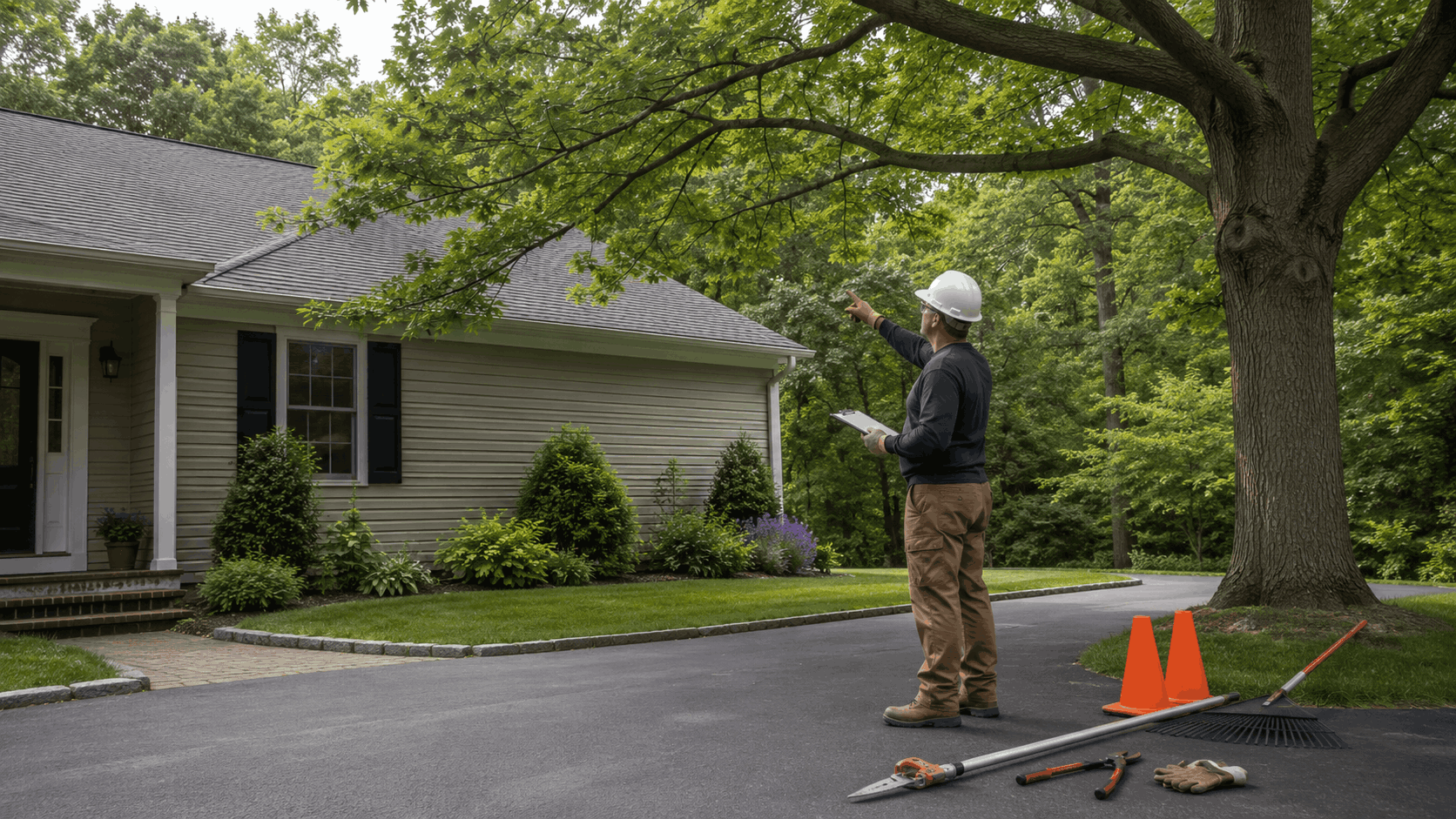
Overhanging branches may not seem like a serious issue at first. They can provide shade and make the home feel tucked into the landscape. Over time, though, branches that sit too close to the roof can scrape shingles, drop debris into gutters, and create moisture problems.
Leaves, twigs, and seed pods can collect quickly, especially during fall in the Hudson Valley. When gutters clog, water may overflow near siding, landscaping, or the foundation. Regular tree maintenance helps reduce that buildup by keeping nearby branches under control.
Tree trimming can also create better clearance around the roofline. A professional can remove or reduce selected limbs while protecting the shape and health of the tree.
Reducing the Risk of Falling Limbs
Falling branches are one of the biggest property hazards linked to neglected trees. A limb does not have to be massive to cause damage. Even medium-sized branches can dent vehicles, break fencing, damage outdoor furniture, or block a walkway.
Deadwood is often hard to see from the ground. It may sit high in the canopy until wind, snow, or ice causes it to fall. Routine tree maintenance gives a trained professional the chance to spot those weak areas before they become an emergency.
Tree trimming can remove dead, cracked, or poorly attached limbs in a controlled way. This is especially important for trees near driveways, patios, decks, sheds, and play areas.
Improving Safety Around Walkways and Driveways
Low branches can make a property less safe and less convenient. They may hang over walkways, block visibility near a driveway, scrape vehicles, or make it harder to mow and maintain the yard.
Tree maintenance helps keep outdoor spaces easier to use. Raising low branches, removing damaged limbs, and clearing overgrown areas can make the property feel cleaner and more open. It can also reduce tripping hazards caused by fallen debris.
Good tree trimming should not make a tree look bare or unnatural. The goal is to create practical clearance while keeping the tree balanced and healthy.
Protecting Fences, Sheds, and Outdoor Living Areas
Many Pleasant Valley properties have a mix of open lawn, wooded edges, fences, sheds, patios, and garden areas. Trees growing near those spaces need regular attention because branches can spread wider than expected.
A limb leaning over a fence may eventually break and cause damage. Branches near a shed can drop debris onto the roof. Overgrown trees around patios can make the space feel crowded, messy, or less comfortable.
Consistent tree maintenance helps property owners stay ahead of these issues. Instead of reacting after something breaks, you can address risky growth before it affects the structures around your yard.
Supporting the Health of the Tree Itself
A healthier tree is usually a safer tree. While no tree is completely risk-free, proper care can help reduce stress, improve structure, and limit the spread of disease or decay.
Professional tree maintenance may include checking for deadwood, weak branch unions, pest activity, fungal growth, bark damage, and signs of decline. These details matter because they can reveal problems long before the tree looks unhealthy from a distance.
Tree trimming also supports health when it is done carefully. Removing the right branches can improve airflow, reduce weight, and help the tree grow with a stronger structure. Poor cutting, however, can weaken the tree, which is why proper technique matters.
Helping Trees Handle Seasonal Weather
Hudson Valley weather can be tough on trees. Heavy rain can soften soil. Winter ice can weigh down branches. Snow can collect in dense canopies. Strong winds can expose weak limbs or unbalanced growth.
Tree maintenance gives your trees a better chance of handling seasonal stress. By removing dead branches, reducing excessive weight, and improving structure, you can lower the risk of weather-related damage.
This does not mean every branch needs to be cut. The best approach is selective care. A professional can identify which limbs create risk and which ones should remain to support the tree’s natural form.
Why Preventive Care Is Better Than Emergency Cleanup
Waiting until a branch falls is usually more stressful and more expensive than planning routine care. Emergency tree work often happens after a storm, when damage has already occurred, and cleanup becomes urgent.
Preventive tree maintenance gives property owners more control. You can schedule service before major issues appear, ask questions, and understand what your trees need. It also helps protect roofs, vehicles, fences, and outdoor spaces from avoidable damage.
Tree trimming done at the right time can make a property safer without turning the job into a crisis. That is especially helpful for older trees or wooded properties where multiple trees may need attention.
Know When to Get Professional Help
Some tree care tasks are safe for homeowners, such as picking up fallen branches, checking for obvious damage, and keeping the base of the tree clear. Larger work should be handled by trained professionals.
Tree trimming near roofs, power lines, large limbs, or tall canopies can be dangerous without the right equipment and experience. A professional understands how to make cuts that protect both the property and the tree.
If your trees are growing too close to your home, hanging over outdoor spaces, or dropping large branches, CMJ Tree Service can help with professional tree maintenance and tree trimming designed to support safer, healthier properties.
For more guidance on timing, read the next blog in this series: How Often Should Trees Be Trimmed or Pruned?
A Safer Property Starts With Consistent Care
Trees are living parts of your property. They change with every season, storm, and year of growth. With regular tree maintenance, you can reduce risks, improve safety, and protect the spaces that matter most around your home.