
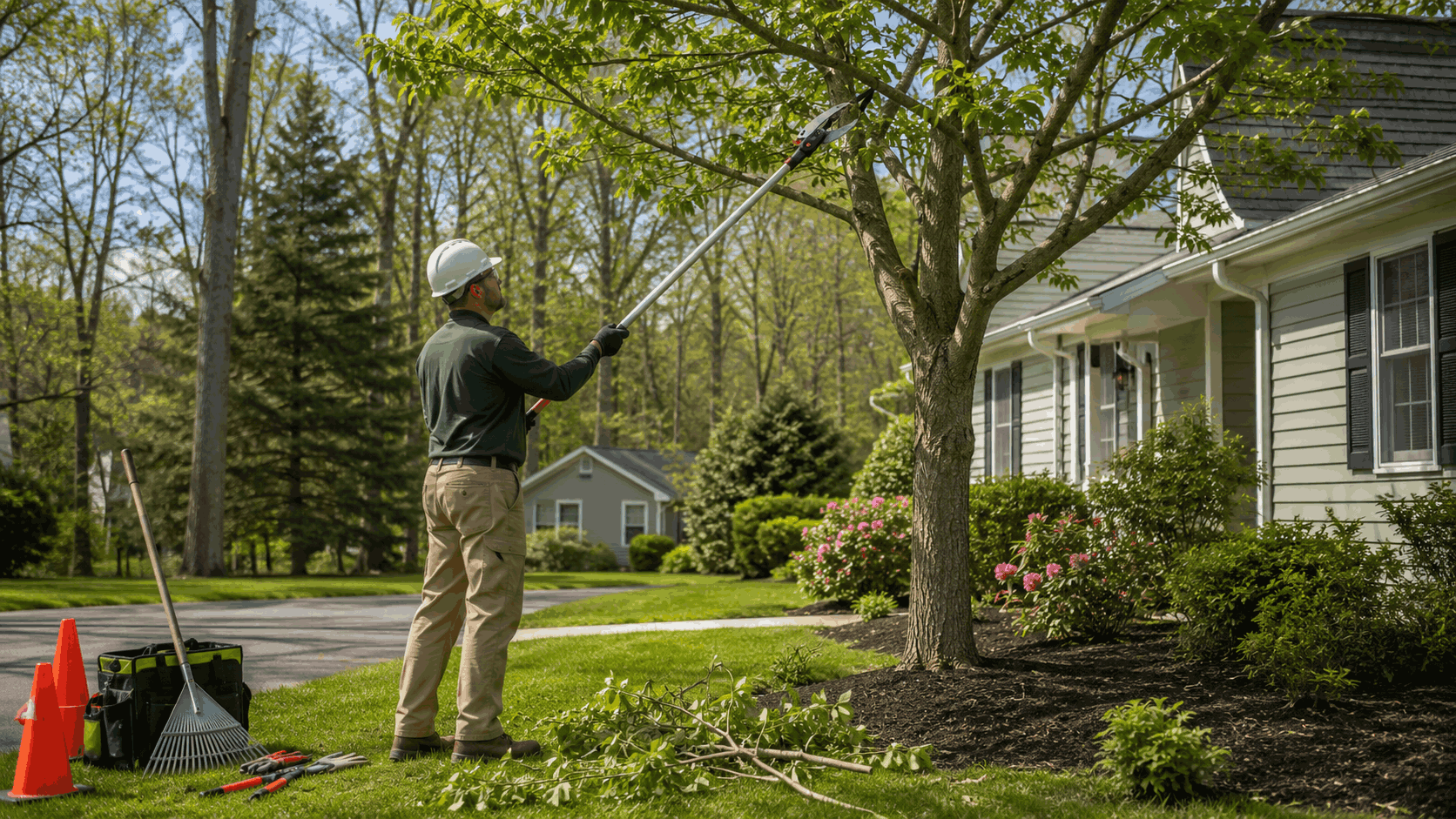
Knowing when to schedule tree care can feel confusing. Some trees look fine for years, while others seem to grow into roofs, driveways, and walkways almost overnight. The truth is that there is no perfect schedule for every property. The right timing depends on the tree’s age, species, health, location, and how quickly it grows.
For homeowners in Pleasant Valley, Poughkeepsie, Hyde Park, LaGrange, Salt Point, Hopewell Junction, and nearby Hudson Valley communities, tree maintenance is especially important because local trees deal with changing seasons, heavy rain, wind, ice, snow, and dense wooded surroundings.
Tree trimming can help reduce hazards, improve shape, and support healthier growth, but it should be done at the right time and for the right reasons.
There Is No One-Size-Fits-All Schedule
Not every tree needs the same level of attention. A young ornamental tree near the front walkway may need shaping sooner than a large mature shade tree growing in the back of the property. Fast-growing trees may need more frequent care, while slower-growing trees can often go longer between visits.
Location also matters. A tree growing near a roof, driveway, fence, shed, patio, or utility area may need closer monitoring than one growing in an open section of the yard. Even if the tree is healthy, branches that interfere with daily use can create safety or property concerns.
That is why tree maintenance should be based on actual conditions, not just a calendar reminder. A professional can look at the tree’s structure and recommend a schedule that fits the property.
General Timing Guidelines for Tree Care
As a general rule, many mature trees benefit from an inspection every year and possible pruning every few years. Younger trees may need more regular attention while their branch structure is still developing.
Tree trimming may be needed sooner if branches are dead, cracked, crossing, hanging low, or growing too close to the home. Storm damage can also change the schedule quickly. A tree that looked fine in spring may need attention after a summer storm or a winter ice event.
Routine tree maintenance helps property owners avoid guessing. Instead of waiting until branches become a problem, regular inspections can reveal whether trimming is needed now or can safely wait.
Young Trees Often Need Early Guidance
Young trees may not look like they need much care, but early pruning can make a major difference. When branches are still small, it is easier to guide the shape of the tree and reduce future structural problems.
Proper early tree maintenance can help create better branch spacing, stronger form, and a healthier canopy. It may also prevent weak limbs from becoming larger hazards later.
Tree trimming for young trees should be light and careful. The goal is not to remove a lot of growth. It is to encourage a strong structure that can support the tree as it matures.
Mature Trees Need a Different Approach
Mature trees usually need a more selective plan. Once a tree is established, the focus often shifts to safety, clearance, balance, and health. This may include removing deadwood, reducing the weight on heavy limbs, and clearing branches away from roofs or walkways.
Large trees should not be trimmed aggressively without a clear reason. Removing too much of the living canopy can stress the tree and make it more vulnerable to decline. Good tree maintenance protects the tree’s natural shape while addressing real concerns.
For older trees on wooded or established properties, professional inspections are especially helpful. A trained crew can spot decay, weak branch unions, pest activity, or structural issues that may not be visible from the ground.
Seasonal Timing Can Matter
In many cases, pruning is best done during the dormant season, when trees are not actively pushing new growth. This can make the branch structure easier to see and may reduce stress on the tree.
However, safety issues should not wait for the perfect season. If a limb is broken, hanging, cracked, or touching the home, it should be checked as soon as possible. Tree trimming may be necessary right away when a branch creates a hazard.
Hudson Valley weather can also affect timing. Heavy snow, ice, and strong winds can expose weak limbs. After major weather events, a tree maintenance inspection can help property owners find damage before it leads to bigger problems.
Signs Your Tree May Need Trimming Now
A tree may need service if branches are touching the roof, blocking a driveway, scraping siding, hanging over a walkway, or growing into nearby trees. Dead branches, cracks, peeling bark, fungal growth, sudden leaf loss, and uneven canopy weight are also warning signs.
Tree trimming may also be needed when branches cross and rub together. Over time, rubbing can damage bark and create openings for decay or disease.
Another sign is excessive density. A canopy that is too crowded may hold more snow and wind pressure, especially during seasonal storms. Proper tree maintenance can improve airflow and reduce unnecessary weight while keeping the tree’s structure intact.
Why Over-Trimming Can Cause Problems
Some property owners think trimming more often means better care, but that is not always true. Too much cutting can weaken a tree. It may remove healthy growth, expose bark to sun stress, and trigger weak regrowth.
Poor tree trimming can also leave a tree unbalanced. If too much is removed from one side, the tree may become more vulnerable during storms. That is why the goal should always be selective care, not heavy cutting just for appearance.
A professional can help decide what actually needs to be removed and what should stay. That kind of judgment is a major part of responsible tree maintenance.
A Professional Assessment Makes the Schedule Clearer
If you are unsure how often your trees need attention, a professional assessment can help. An experienced tree service team can evaluate growth, canopy density, branch structure, clearance needs, and overall condition. From there, they can recommend a practical schedule based on the tree itself.
That makes future care easier. Instead of guessing, you have a clearer plan for ongoing tree maintenance and safer, more effective tree trimming.
If you want guidance tailored to your property, CMJ Tree Service offers professional tree maintenance and tree trimming to help property owners stay ahead of safety issues and support healthier trees.
If you are thinking about handling the work on your own, the next blog in this series is worth reading: Why DIY Tree Maintenance Can Be Risky.
Consistent Care Works Better Than Waiting Too Long
The best trimming schedule is the one that fits your trees, not just a date on the calendar. With regular checkups, careful pruning, and attention to warning signs, property owners can avoid unnecessary damage and make better long-term decisions.
Tree care is not about trimming as often as possible. It is about trimming at the right time, for the right reasons, and in the right way.