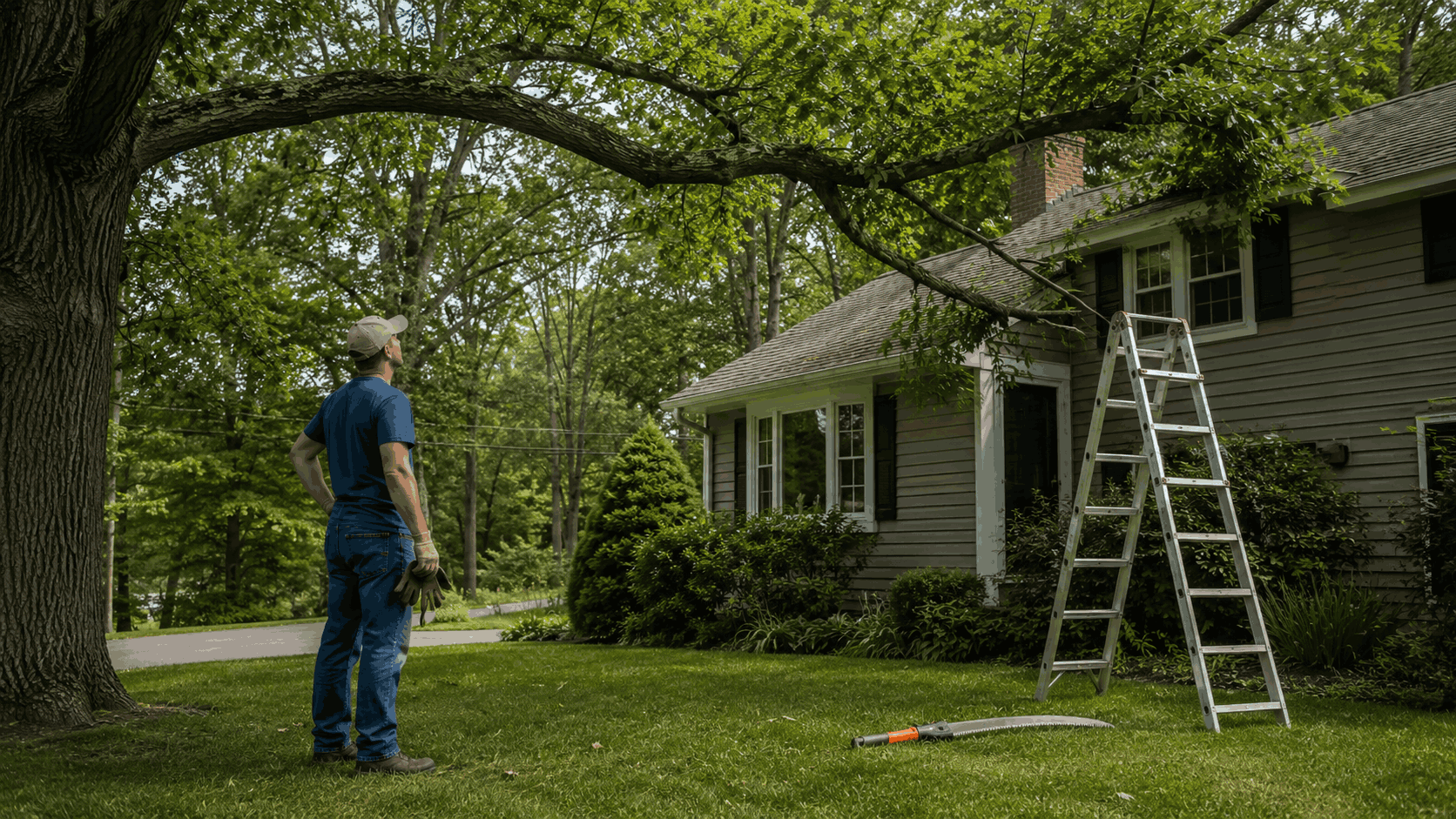
It is easy to understand why many property owners think about handling tree work themselves. A few low branches, some visible deadwood, or a tree that looks overgrown may seem like a simple weekend project. With a ladder, a saw, and a little confidence, the job can look manageable from the ground.
The problem is that tree maintenance is often more complicated than it appears. What looks like a small trimming job can turn into a safety issue, property damage, or long-term stress for the tree. Tree trimming is not just about cutting branches. It requires careful planning, the right tools, and an understanding of how trees respond after each cut.
For homeowners in Pleasant Valley, Poughkeepsie, Hyde Park, LaGrange, Salt Point, Hopewell Junction, and nearby Hudson Valley communities, tree care can become even more challenging because of mature trees, wooded properties, seasonal storms, heavy rain, snow, and ice.
Tree Work Is More Dangerous Than It Looks
One of the biggest risks with DIY tree maintenance is personal injury. Even small jobs can become dangerous when ladders, hand saws, pole tools, or chainsaws are involved. A branch may shift unexpectedly, the ladder may move on uneven ground, or a tool may become difficult to control.
Height makes the situation more serious. Many homeowners feel comfortable cleaning up small fallen branches, but cutting limbs above shoulder level is very different. Once a branch is overhead, it can be hard to predict where it will fall or how it will move after the cut.
Tree trimming becomes even riskier when the tree is near a roof, fence, driveway, vehicle, shed, or power line. In those situations, one mistake can affect more than the person doing the work.
Poor Cuts Can Harm the Tree
A tree is a living structure, and every cut matters. When tree maintenance is done incorrectly, the tree may struggle to recover. Cuts made too close to the trunk, too far from the branch collar, or in the wrong section of the canopy can invite decay and weaken future growth.
Poor tree trimming can also remove too much healthy canopy at once. This can stress the tree, reduce its ability to produce energy, and leave it more vulnerable to pests, disease, and weather damage.
A branch may look unnecessary to a homeowner, but it may play an important role in the tree’s structure. Removing the wrong limb can leave the tree unbalanced or create weak regrowth that becomes a future hazard.
Hidden Problems Are Easy To Miss
Trees often have issues that are not obvious from the ground. A branch may look solid but have a crack on the upper side. A limb may be heavier than expected because of its length, angle, or growth pattern. There may also be decay inside the trunk or weak branch attachments hidden by leaves.
This is one reason professional tree maintenance is valuable. A trained crew knows what warning signs to look for before cutting begins. They can assess the canopy, trunk, root area, and surrounding property to decide whether tree trimming is safe and how it should be handled.
Without that experience, a homeowner may accidentally cut a limb that splits, twists, or falls in an unexpected direction.
The Wrong Tools Can Make the Job Worse
DIY tree work often starts with whatever tools are already in the garage. That might be fine for light cleanup, but it is not always enough for proper tree care. Dull blades, unstable ladders, short tools, or improper saws can make the work harder and less controlled.
Rough cuts can tear bark, leave uneven wounds, or damage the branch collar. These mistakes may not look serious right away, but they can affect how the tree closes over the wound.
Tree maintenance also becomes more difficult as fatigue sets in. Cutting branches, dragging debris, and working overhead can wear a person down quickly. When someone gets tired, it becomes easier to lose balance, rush the work, or make poor decisions.
Property Damage Can Happen Quickly
A falling branch does not need to be huge to cause damage. A medium-sized limb can dent a car, crack a fence, damage a gutter, break patio furniture, or hit landscaping. If the branch is over a roof, walkway, or driveway, there may be very little room for error.
Many homeowners assume they can control where a branch will land. In reality, once the cut is made, gravity, branch weight, tension, and angle all affect movement. A limb may swing, roll, split, or fall faster than expected.
Tree trimming should reduce risks around the property. If the work creates more risk than it solves, it is usually better to call a professional.
Power Lines and Large Limbs Should Never Be DIY Projects
Some tree maintenance situations should always be handled by trained professionals. Trees near power lines are one of them. Even if a branch does not appear to be touching a line, the risk is too serious to ignore.
Large limbs are another concern. Heavy branches require careful planning, proper equipment, and controlled removal. Cutting a large limb without the right process can damage the tree, the property, or the person doing the work.
Branches over roofs, garages, sheds, driveways, and fences also need extra care. Professional tree trimming crews understand how to manage these areas without relying on guesswork.
What Homeowners Can Safely Do
Not every part of tree care is off-limits. Homeowners can still play an important role in basic observation and upkeep. You can pick up small fallen branches, keep the area around the trunk clear, watch for dead limbs, and look for changes in leaves, bark, or overall structure.
You can also take photos of areas that concern you and share them with a tree service company. This helps start the conversation and gives the crew a better idea of what may be happening.
The key is knowing when simple cleanup becomes actual tree maintenance. Once height, heavy limbs, tools, or structural decisions are involved, professional help is usually the safer choice.
Why Professional Tree Care Is Worth It
Professional tree maintenance is about more than equipment. It is also about training, experience, and decision-making. A qualified tree service team knows how to assess the structure of the tree, plan safe cuts, manage falling limbs, and protect the surrounding area.
That experience can make a real difference in both safety and results. Instead of guessing where to cut or how much to remove, property owners can rely on a team that understands how to protect both the tree and the property.
If you are dealing with overgrown branches, visible deadwood, or safety concerns around your yard, CMJ Tree Service offers dependable tree maintenance and tree trimming for property owners who want the work handled the right way.
If you want to know what professional service actually looks like, the next blog in this series explains it clearly: What to Expect During a Professional Tree Maintenance Visit.
The Safer Choice Is Usually the Smarter One
DIY tree work can seem like a way to save time or money, but it often brings more risk than people expect. Between the safety concerns, the chance of improper cuts, and the potential for property damage, many jobs are better left to trained professionals.
Good tree maintenance protects both the tree and the people around it. When the work involves height, heavy limbs, or important structural decisions, professional care is often the safest path forward.